
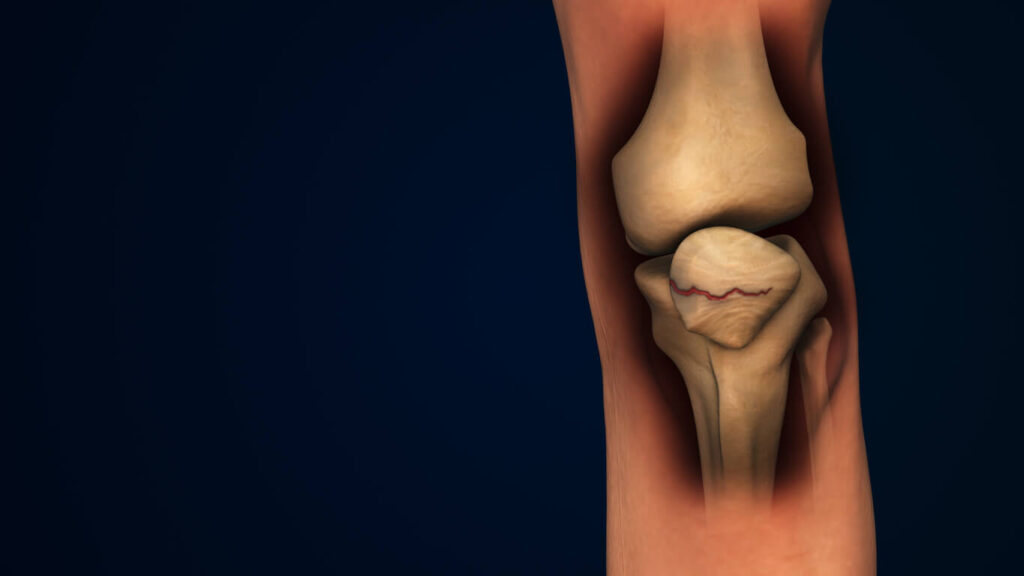
A meniscal tear ranks among the most common knee injuries, yet it remains one of the most misunderstood.
In short,
- Many meniscal tears can heal successfully without surgery, depending on the tear’s location, size, and pattern.
- The best meniscal tear treatment near you is highly individualized, based on the type of tear, the patient’s age, activity level, and overall health.
- An accurate diagnosis from a qualified specialist is the crucial first step in developing an effective and appropriate care plan.
This guide separates fact from fiction. You will learn what a meniscus actually does, why so many myths persist, and how modern orthopaedic specialists treat tears today.
What Is a Meniscus?
The meniscus plays a vital role in how your knee functions. Each knee holds two C-shaped wedges of fibrocartilage, called menisci, positioned between your thighbone (femur) and shinbone (tibia). These structures act as crucial shock absorbers. They distribute weight evenly, stabilize the joint, and help lubricate the surfaces during movement.
According to the National Institutes of Health (NIH), a meniscus tear is a very common injury, and its incidence is increasing across all age groups. Meniscal tears happen in two main ways.
- A sudden, forceful twist on a planted foot, common in sports, can rip the cartilage.
- Tears also develop degeneratively as the cartilage naturally weakens with age.
Common symptoms include:
- Sharp pain, especially when twisting or rotating the knee
- Swelling and stiffness
- A limited range of motion
- Mechanical symptoms like locking, catching, or clicking
Understanding the anatomy matters because the type of tear directly shapes your treatment options.
Myth #1: All Meniscal Tears Require Surgery
The Fact: Many tears heal effectively without surgery. Conservative, non-surgical treatment is often the first and most successful approach, particularly for smaller, degenerative tears or tears located in the well-supplied vascular region of the meniscus.
Surgery becomes necessary only when a tear is large, unstable, or causes persistent mechanical symptoms like a locked knee. For a significant number of patients, structured physical therapy and targeted care resolve the problem entirely.
When you look for meniscal tear treatment near you, an experienced specialist will explore conservative options before recommending an operation.
Myth #2: Rest Alone Will Heal Any Tear
The Fact: Rest helps in the early stages, but it rarely fixes a meniscal tear on its own. The healing potential depends almost entirely on the tear’s blood supply.
- The Vascular “Red Zone”: Tears in the outer one-third of the meniscus, which has a rich blood supply, have good healing potential with conservative care.
- The Avascular “White Zone”: Tears in the inner two-thirds of the meniscus, which lack a direct blood supply, have very limited healing capacity and often require surgical treatment when symptoms persist.
Relying on rest alone for a white-zone tear can delay recovery and worsen the damage. Effective healing usually requires active rehabilitation, not just inactivity.
Myth #3: Surgery Means Removing the Whole Meniscus
The Fact: Modern orthopaedic surgery prioritizes preservation. Surgeons use knee arthroscopy, a minimally invasive technique, to visualize and repair the joint through small incisions. They choose the least invasive option that resolves your symptoms.
The two primary surgical approaches are:
- Meniscus Repair: If the tear is in the red zone, which has a good blood supply, the surgeon sutures the torn edges together to preserve the natural shock absorption.
- Partial Meniscectomy: If a tear is in the avascular white zone or is too complex to fix, the surgeon trims only the damaged portion, leaving as much healthy tissue intact as possible.
According to The Archives of Bone and Joint Surgery, removing the entire meniscus is rarely the goal of meniscal tear treatment near you, because preserving cartilage protects your knee over the long term.
Myth #4: Recovery Is the Same for Everyone
The Fact: Recovery varies significantly by treatment type and individual factors. Rushing the process risks inflammation, poor healing, or re-tearing the cartilage.
Here is what realistic recovery looks like:
- Non-Surgical Recovery: A structured physical therapy program typically lasts 6 to 12 weeks, with progress monitored closely.
- Partial Meniscectomy Recovery: Patients often bear weight almost immediately and return to light activities within 4 to 6 weeks.
- Meniscal Repair Recovery: This takes longer, often involving 4 to 6 weeks of limited or no weight-bearing on crutches. A full return to sports can take 4 to 6 months.
Adherence to your prescribed protocol is paramount. Your commitment to rehabilitation directly affects your outcome.
Non-Surgical Options for Meniscal Tear Treatment Near Me
For many patients, conservative care delivers excellent results. These approaches focus on pain relief and functional improvement.
- RICE Protocol: Rest, Ice, Compression, and Elevation provides immediate first-aid for acute symptoms, reducing stress, inflammation, and swelling.
- Physical Therapy: A therapist designs exercises to strengthen the quadriceps and hamstrings, which improve flexibility, balance, and range of motion.
- Medications: Over-the-counter NSAIDs like ibuprofen or naproxen alleviate pain and reduce swelling.
- Injections: Corticosteroid injections offer short-term relief for persistent inflammation, while emerging biologic options like platelet-rich plasma (PRP) are still under study.
If you are weighing meniscal tear treatment near you, these conservative steps usually come first.
Surgical Treatment Options
When non-surgical methods fail, or when the tear is large, unstable, or locks the joint, surgery may be the right path. Knee arthroscopy allows surgeons to see and treat the inside of the knee with minimal disruption to surrounding tissue. As covered above, the goal is always to repair when possible and trim conservatively when repair is not an option.
Like any procedure, arthroscopy carries rare risks, including infection, blood clots, stiffness, or nerve injury. A partial meniscectomy also alters knee mechanics by removing natural cushioning, which can slightly raise the long-term risk of osteoarthritis. This is precisely why specialists prioritize meniscus preservation whenever the tear allows it.
Diagnosis: The Crucial First Step
Accurate diagnosis guides every treatment decision. Your orthopaedic specialist will assess your symptoms, review the injury mechanism, and examine your knee for swelling, tenderness, and range of motion. Physical tests, such as McMurray’s test, can indicate a tear.
While X-rays rule out fractures, Magnetic Resonance Imaging (MRI) is the best choice for diagnosing meniscal tears. It provides detailed soft tissue images that reveal the tear’s location, size, and pattern. This information informs a personalized plan aligned with your lifestyle and goals.
When to Seek Emergency vs. Specialist Care
Knowing where to turn protects your knee and your overall health.
Seek immediate emergency care if you experience:
- An inability to bear any weight on your leg
- A “locked” knee that you cannot bend or straighten
- Signs of a blood clot, such as significant calf swelling, pain, tenderness, or redness
- Signs of infection after a procedure, including fever, chills, or pus draining from an incision
Consult an orthopaedic specialist if you experience:
- Persistent knee pain, swelling, or stiffness that does not resolve with rest and ice
- Mechanical symptoms like locking, catching, or the knee giving way
- Difficulty with daily activities due to knee instability or pain
Frequently Asked Questions
Below, we’ve answered some common questions about meniscal tear treatment near you.
Can a meniscal tear heal on its own?
Some tears in the vascular red zone can heal with conservative care and physical therapy. Tears in the avascular white zone have limited healing potential and often require treatment. A specialist can determine your tear’s healing capacity through an MRI.
How long until I can return to sports after a meniscal tear?
It depends on your treatment. Recovery after a partial meniscectomy may allow light activity in 4 to 6 weeks, while a meniscal repair can require 4 to 6 months before a full return to sports.
Where Can I Find Meniscal Tear Treatment Near San Antonio, TX?
Myths should never stand between you and effective care. The truth is reassuring. Many meniscal tears respond well to non-surgical treatment, and when surgery is needed, modern techniques prioritize preserving your natural knee.
If persistent knee pain, swelling, or stiffness is holding you back, our orthopaedic specialists can provide meniscal tear treatment near you. Your consultation includes a thorough physical examination, imaging review, and an open discussion of every treatment option available to you. We empower you to choose the best path for your health.
Call the Center for Orthopaedic Surgery and Sports Medicine at (210) 692-7400 or use our online appointment request form to schedule your consultation.
